본문
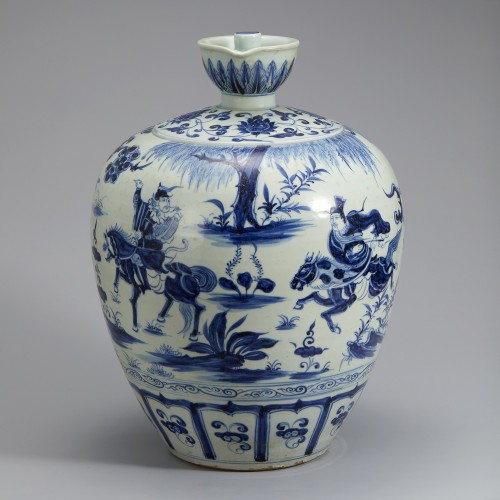
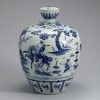
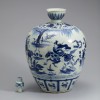
명나라 영락제 시기에 제작된 청화백자 항아리입니다. 구연부에는 주구(注口) 형태의 굴곡을 만들어 액체를 따르기 편하도록 하였습니다. 마개가 있어 액체를 보관하기 용이하며, 식초 등을 담은 것으로 추정됩니다. 어깨는 크게 부풀어졌다가 굽으로 갈수록 점차 좁아지는 기형입니다.
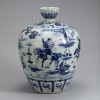
몸체 중앙에는 발색이 짙은 청화로 세 명의 장수가 전투하는 장면인 삼명장문(三名將紋)이 시문되었습니다. 세 장수가 각각 말을 타고 서로 쫓고 쫓기는 모습을 역동적으로 묘사하였습니다. 세 장수는 정양(定陽)의 유무주(劉武周), 낙양(洛陽)의 왕세충(王世充), 태원(太原)의 이연(李淵)을 가리킵니다. 이들은 수나라(隋, 581~619) 말기에 등장하였던 인물들입니다. 구연부에는 파초 문양이, 어깨에는 보상화(寶相花) 문양이 그려져 있습니다.
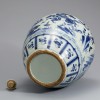
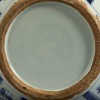
굽바닥에 음각으로 화문(花紋)과 ‘永樂年製(영락년제)’라는 관지가 새겨져 있어 명나라 영락 연간(1403~1424)에 제작된 것으로 추정됩니다. 특히 이 시기에는 페르시아에서 코발트 안료가 수입되면서 청화백자의 제작 기술이 크게 발전하였습니다. 영락 연간의 청화백자는 주로 궁중에서 의례나 연회용으로 사용되었으며, 대외 교류를 위한 외교 선물로도 활용되었습니다.
盖罐于明永乐时期制作。口沿部作注口形曲折设计,便于倾倒液体。器物配盖,利于液体的盛装与保存,推测可能用于盛装醋等调味品。丰肩,肩以下渐收。
器身中央以发色浓重的青花绘饰三名将纹,描绘三位将领骑马交战的场面。三位武将骑马追逐、相互攻战,画面动感十足。三位将领分别为定阳的刘武周、洛阳的王世充以及太原的李渊,他们皆为隋代(581—619年)末年活跃于历史舞台的人物。口沿绘蕉叶纹,肩部则饰以宝相花纹。
圈足底部阴刻花纹,并刻有“永樂年製”款识,推测于明代永乐年间(1403—1424年)制作。此时期随着波斯地区钴料的输入,青花瓷的烧造技术得到显著发展。永乐时期的青花瓷多用于宫廷礼仪与宴飨之用,同时亦常作为对外交流的外交赠礼。
━━━━━
This blue-and-white porcelain jar was produced during the reign of the Yongle Emperor of the Ming dynasty. The rim is formed with a slight spout-like indentation, allowing liquid to be poured more easily. A lid accompanies the vessel, making it suitable for storing liquids, and it is presumed to have been used for holding vinegar or similar condiments. The body swells broadly at the shoulder and gradually tapers toward the foot.
At the center of the body, a scene depicting three generals in combat, known as the Three Famous Generals motif, is painted in deep cobalt blue. Each general is shown mounted on horseback, dynamically pursuing one another. The figures represent Liu Wuzhou of Dingyang, Wang Shichong of Luoyang, and Li Yuan of Taiyuan, historical figures who appeared during the late Sui dynasty (581–619). Banana-leaf motifs decorate the rim, while the shoulder is adorned with baoxianghua (precious floral) designs.
Incised floral designs and a reign mark reading “Yongle Nianzhi” are carved on the base, suggesting production during the Yongle period (1403–1424) of the Ming dynasty. During this time, cobalt pigment imported from Persia contributed to significant advances in blue-and-white porcelain production. Such wares were mainly used in the imperial court for rituals and banquets and were also presented as diplomatic gifts in foreign relations.