
본문
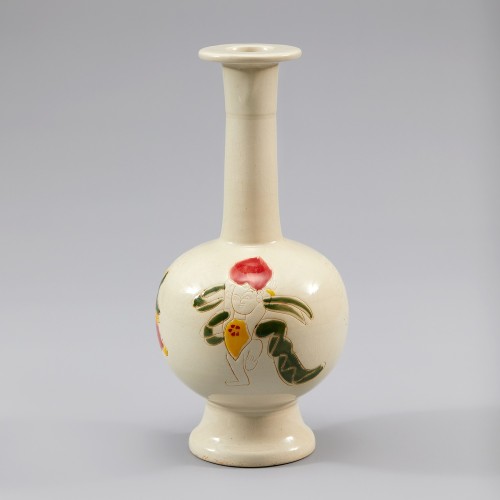
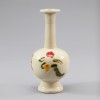
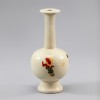
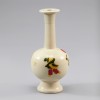
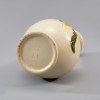
북송대 정요에서 제작된 백자 장경병입니다. 구연은 넓고 납작하며, 목은 길고 곧게 뻗었습니다. 몸체는 둥글고 풍만한 구형이며, 아래로 갈수록 벌어지는 높은 굽이 몸체를 안정적으로 받치고 있습니다. 정요는 북송 5대 명요(여요, 가요, 관요, 정요, 균요) 중 하나로 고급 자기를 생산하던 가마입니다. 이 유물은 태토가 곱고 백유가 윤택하게 전면에 시유되었습니다.
몸체 중앙에는 마주보며 놀고 있는 동자 두 명과 머리에 커다란 복숭아를 이고 있는 동자 한 명이 시문되었습니다. 음각으로 문양을 새기고 적색, 녹색, 황색 안료로 문양을 채색하였습니다. 안료의 발색이 선명하고 균질하게 나타납니다. 문양들 사이에는 21자의 전서체 명문이 새겨져 있습니다. 명문은 길상의 내용을 담은 축원문으로 추정됩니다.
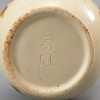
굽바닥에는 음각으로 '易定(역정)'이라는 관지가 새겨져 있습니다. 이러한 관지가 있는 도자기는 북송 인종(仁宗) 1038년부터 휘종(徽宗) 1125년 사이에 제작된 것으로 추정됩니다. 역정 관지는 궁에서 문무관들에게 하사하는 도자기에 새겨졌으며, 이 유물도 궁에서 주문하여 관리에게 하사하기 위해 제작된 것으로 보입니다.
此为北宋时期定窑烧造的长颈瓶。撇口,长直颈,球形腹,高足外撇,整体端庄稳重。定窑为北宋五大名窑(汝窑、哥窑、官窑、定窑、钧窑)之一,以烧造高等白瓷著称。本器胎质细腻,通体施白釉,釉色温润莹洁。
器身中央饰有童子图案,其中两名童子相对嬉戏,另一童子头顶硕大寿桃。纹饰以阴刻技法刻划,再以红、绿、黄三色加彩填绘,色泽鲜明匀净,层次分明。纹样之间刻有21字篆书铭文,内容应为寓意吉祥的祝颂之辞。
圈足内底阴刻“易定”款识。带此类款识的瓷器,多推断为北宋仁宗(1038年)至宋徽宗(1125年)之间所制。“易定”款瓷器为宫廷所用,常作为皇室赐予文武官员之物。此瓶当亦为宫廷定烧、用于赏赐官员之器。
This is a white porcelain long-necked bottle produced at the Ding kiln during the Northern Song dynasty. The mouth rim is wide and flat, the neck long and straight, and the body rounded and full, supported by a high, slightly flaring foot. Ding kiln was one of the Five Great Kilns of the Northern Song period, renowned for producing high-quality wares. The clay body is fine and dense, and a lustrous white glaze evenly covers the entire surface.
At the center of the body, two boys are depicted playing face to face, accompanied by another boy balancing a large peach on his head. The designs were incised and then painted with red, green, and yellow pigments. The colors appear vivid and evenly applied. Between the motifs is a twenty-one-character inscription in a modified seal script. The inscription is presumed to be an auspicious dedicatory text conveying blessings.
On the base, the reign mark “Yiding” (易定) is incised. Porcelains bearing this mark are believed to have been produced between 1038, during the reign of Emperor Renzong, and 1125, under Emperor Huizong of the Northern Song. The Yiding mark was inscribed on ceramics commissioned by the court and bestowed upon civil and military officials. This vessel is therefore thought to have been specially ordered by the palace for presentation to an official.